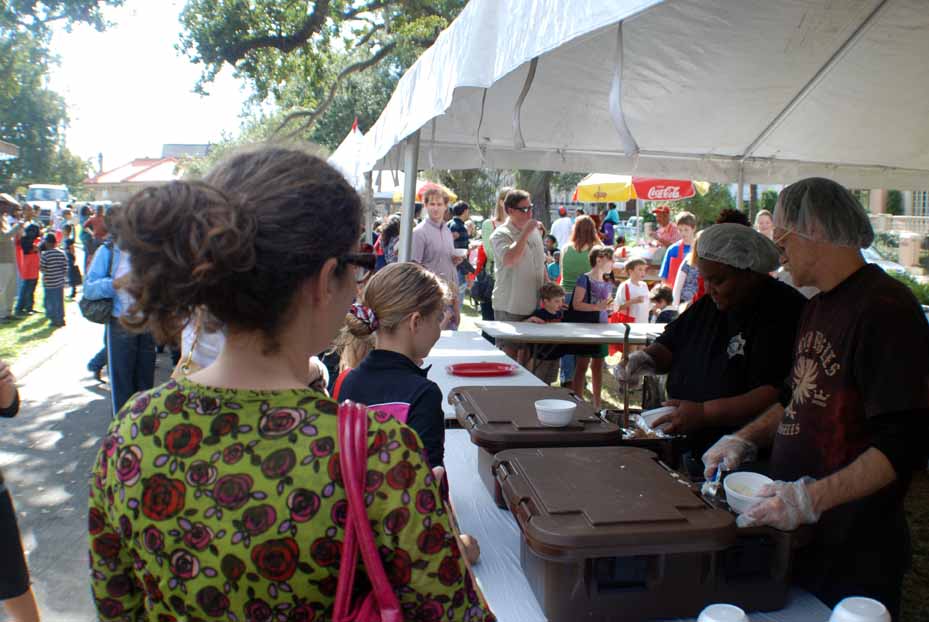
Jim Neely samples the ribs that have made his name synonymous with the ‘103 Best Places to Chow Down in America’ and a champion of barbecue in Memphis.
No mistaken, Jim Neely is the Neely who put the Neely name in barbecue in Memphis, Tennessee
By Albert C. Jones
America, The Diversity Place
MEMPHIS, Tennessee — There is no mistaking, after 32 years of marketing barbecue, Jim Neely is to be accorded the title of the Neely who first introduced the Neely name to barbecue in Memphis. That undisputed claim is likened to being the first heavyweight champion of the world or likened to being the world’s fastest human. It has its merits in a city and state with multiple Neely barbecue places.
Here, in the Mid-South, barbecue has few rivals as the cuisine of choice. Novices to pit masters make claims of more skillful, exclusive, better, great, a cut above — any number of hyperbole that mean set apart. Braggadocio is praxis in the legend of barbecue and that’s not only given to Memphis.
In families or those who venture away to start their own, it’s either continuity — it is like the original — or there are stakes with claims of distinction. The Neelys of Memphis fit this depiction of a family given to branching off into the barbecue business.
“My sons and my nephews were all working in here, going to high school,” Jim Neely said, during an interview at a table in his restaurant, Jim Neely’s Interstate Bar-B-Q. “Some of them were still in elementary school. After they finished college, my nephews decided they wanted to go in business and they went out and opened Neely’s Barbecue.
“All that started from right here,” Neely defended. “Of course, if you listen to the little reality cook show they are doing, it was all about them. But everything started here. I am the Neely that put Neely in barbecue in the state of Tennessee. I’m the Neely. Before me, there was no Neely in barbecue in the state of Tennessee. I’m the one who created the whole legacy.”
So the narrative of the story becomes the legacy of Jim Neely.
Walls here are adorned with framed news clippings, set apart honors, plaques, photos, family portraits, photo opportunities with famous customers. There is a framed poster, in black and white, of Muhammad Ali standing over and taunting Sonny Liston, who has been knocked flat on his back. President Obama hasn’t been here yet, but there is a framed, color portrait of him.
There is copy of an image of Neely’s great-grandmother, of African descent, and his great-grandfather, an Irishman, who signed on a marriage certificate that he was mulatto. Miscegenation was against the law then. Neely is open about all this, even his great-grandfather fighting on the side of the Confederacy during the Civil War and being accused of desertion. Allegations were warrantless because the war had ended and the men left to return home.
In the most direct way, continuity, that people have stayed here generation after generation and have maintained their cultural roots, has something — probably everything — to do with know-how and why barbecue reigns as the cuisine of choice in this city.
Barbecue, in Memphis and other competing markets throughout the U.S., means big business and claims to the best barbecue, recognition and honors, certifies and positions that businessperson to cult of personality status, prominently known in epicurean lore of city, state and nation. Barbecue, to be sure, is a cultural marvel. No dollar amount could muster advertising prowess, relevancy, nor market share that Jim Neely has positioned himself in Memphis and beyond. He, in a city known for its “King of Rock and Roll,” is barbecue royalty.
The wherewithal of a savory experience of pit barbecue, slow-and-low method, that keeps connoisseurs coming back, some week after week, some month after month, others year after year, some whenever in Memphis, is the only route to the top. Honors and recognition are only stamps of approval of what the eating people already have proclaimed. This is some good stuff.
No matter the frequency, a remarkable palate experience is the bellicose that flames word-of-mouth extolling in a manner that is evangelical zeal. Barbecue is a tourist magnet for Memphis, just as much as Elvis and Graceland, Stax Museum of American Soul Music and the locus of the Mississippi River culture.
“I am one of the tourist draws in Memphis now,” Neely said, responding to a question. “You would be surprised that people who come to Memphis, passing through Memphis or stop in Memphis simply because Jim Neely’s Interstate Bar-B-Q is here.
“You would be surprised at the people,” he said. “Say you are in Los Angeles and you are flying to Florida, or you are flying to North Carolina and you are leaving Los Angeles, or San Francisco, or Seattle, more than likely they do not have a direct flight. You would have to fly to Detroit, Minneapolis or Memphis. These are the hubs. There are people who plan their flights to come through Memphis just so they can eat barbecue while they are here in Memphis at the airport.”
Jim Neely’s Interstate Bar-B-Q, through its various facilities expansion, has been located at the same spot at 2265 South Third Street, nee B. B. King Highway, just off Interstate 55, the Exit 7 onto U.S. 61, for all of its thirty-two years. A left turn at the same exit leads to Tunica, Mississippi, where the gambling resorts are 25 minutes south. He also has stores at the airport and across the state line in Mississippi.
The restaurant here seats 275 and the walk-in pickup area can accommodate dozens. There are larger-than-life murals of Jim Neely on the north façade, on a maroon-colored van and on the smokehouse out back. Inside, it doesn’t take long to figure out that Neely is a straightforward guy in the way people in this part of the South speak their minds. At the same time, there is a civility here that used to be odd. To have lived here, one knows that without pause, as the way life here used to be.
In terms of continuity, for sure, barbecuing and the method of pit cooking are pre-modern. Innovations may come and go, but the method that sustained folks long before modern kitchens is still employed. Neely’s method is the same one used by his forbearers here in the South.
Save for ingredients, required listing on labels by the Food and Drug Administration, there is much also made of secret sauces, mysterious dry rubs, fanciful marinades, among others, that claim distinction and give a competitive advantage.
Neely and Memphis and creating a legacy for what makes for the best barbecue with others left in the wake
The most common asked question is “What makes for good barbecue?”
“First of all, it’s know-how,” Neely said. “That’s the first thing that makes a good barbecue. Once you have the know-how, it’s about product. If you buy the best meat, you are going to get the best return. If you buy a cheap piece of meat, you are going to get what you buy. I don’t buy nothing but the best pork. I don’t buy fatty hogs. I don’t buy greasy hogs. Because if you get a hog that weighs 300 pounds and you kill it, he is just about going to be fatty. That fat will run all through the meat.
“Of course nowadays, most of these big companies, they are raising these hog like people raise chickens,” he explained. “You take a chicken and hatch the egg and in five week’s time, he is a fryer. They raise those chickens on floors, feeding them grain and stuff. They are doing hogs the same way now. They have hog feedlots. Hogs are not raised out there like the way we used to raise them in the country, feeding them slop and old leftovers. They have all been fed grain.
“I can show you in my kitchen right now — I can take a pork shoulder — and pull it apart,” Neely said. “You would think it is turkey meat, a chicken breast or something. That’s how white the meat is now and very little grease in it. That’s why people used to say years ago. ‘That ole pork will kill you. Well, it will kill you because it was all fat and grease.”
Neely and wife, Barbara, have been married forty years. She is his travel partner on exotic trips around the world like the one to Egypt to investigate the pyramids. In November 2010, they will board ship in Istanbul for a 32-day cruise that will take them to Morocco, down the west coast of Africa, going ashore in Gambia, Senegal, Dakar and South Africa.
“My wife and I have been doing this together now for 32 years,” he said, meaning the restaurant. “It’s been a joint venture. My wife still walks through that door at four-thirty or five o’clock in the morning and is here to six o’clock every evening. Every evening, and she’s seventy-one years of age. There is not an employee in here that has her stamina, even in their early twenties, twenty-two or twenty-three, talk about they are tired. We don’t get tired. When we get tired, we do like what we did and go to Egypt for two weeks. We leave out of here, Sunday after next, in my big RV. We are going to California for two or three weeks. We come back and we are right back on it. I am the drummer and she is the drum major.”
Over the years, Neely has helped relatives establish barbecue restaurants in Memphis and elsewhere in the United States.
“From what I started here, the first people that wanted to go into the barbecue business, was my brother’s kids,” Neely said. “My brother died in 1977. He and I were working in insurance together. And when they wanted to go into the business, I helped them get started. They opened up Neely’s Barbecue.”
Patrick Neely, a nephew, and wife, Gina, host two shows on The Food Network: “Down Home with the Neelys” and “Road Tasted with the Neelys.”
“Before then, in 1984, I went out to California and opened my brother a place out in Gardena,” Neely said. “I carried two of my nephews with me. Patrick was one of them I carried out there and Gaelin. Patrick is the one you see on The Food Network show. We went out and his older brother, Gaelin, went out and opened that place for my brother. Later on, about two years later, they wanted to go into business, so they got opened up here in Memphis and called it Neeley’s Barbecue. They also have an operation now in Nashville.
Those nephews, Patrick, Gaelin, Tony and Mark, got their start in 1988.
“Since then, I have another sister-in-law in Los Angeles that I helped get started,” Neely said. “She is out in L.A. doing very well. I have a nephew that did 20 years in the Marines. He always idolized me and when he got out, he wanted to open up a place in Phoenix. You see that picture on the wall, “Memphis Best Barbecue,” that’s in Phoenix. I went out and spent time with him and got him up and running. He’s been going on now for two years.
“I have a cousin, her husband has a barbecue place in St. Louis, and they are doing good,” he said.
Jim Neely’s son, Ken, opened Neely’s Hickory Bar-B-Que in 2008 in Memphis.
Neely began with a grocery store that needed a new sheriff to come in and clean up the neighborhood
When the Neelys started their business, a grocery store, it was for a son who came out of the U.S. Navy fifty percent disabled. The location of the grocery store then fit the description of the mean streets. It needed the kind of tending to when a new sheriff is in town.
“Let me tell you something,” Neely said. “When I came to this corner here, and I worked Watts during the Watts riots back in the Sixties. I was a manager with an insurance company. I had agents all over there on the eastside of Los Angeles and South Central L.A. But when I came back home to Memphis, this corner here was worse than any corner that I saw in Los Angeles. By eight o’clock every morning, you had no fewer than 20 young youths on this corner. Didn’t work, they would be sitting all in the windowsill. There was a liquor store next door. They would have a bottle of wine between their legs, smoking refer, urinating all on the side of the building. By ten o’clock, they had been out here fighting and stuff.
“When I bought this property, I told them they couldn’t hang on this corner no more,” Neely said. “They told me that I couldn’t stop them because they were here when I got here. I told them point blank. ‘Then if you want to run it, you should have bought it. Because anything I own, I run.’ I didn’t bother calling the police. I took a Smith and Wesson, .357 Magnum, and put it on my side and had a fiberglass billy club and I cleaned this corner up.”
The clean up — so long ago in the past as to not reveal a present clue — led to a clientele that includes families, church folks, college students, healthcare professionals, business people, politicians, construction and street maintenance crews of every multicultural experience. This description fits the day before, dinging privately, and the next day during the interview. Few dine alone and some of Neely’s loyal customers are in their third decade coming here.
“I took this corner, at that time, probably wasn’t creating $300 a year for the State Department of Revenue,” Neely said. “Right now, I collect almost $800,000 to $900,000 a year in sales taxes. That’s the impact it has been. I work 90 people in here. We have sales in here at right around $6.5 million a year. That is doing a lot for the City of Memphis. There are people who work here that are buying homes.
“Like they said at the last election,” he said, “it is small business that is keeping America running. Big businesses hide their money or ship it out to other countries. We don’t do that. We keep America running.”
Questions were shaped by experience and were not bent on uncovering proprietary secrets.
“What have you learned most in 32 years as a barbecue restaurateur?
“How to be consistent every day,” Neely said, “where you are constantly putting out a consistent product. Nothing changes. I have customers who will walk in here and tell me. ‘Jim, I have been coming in here for 30 years and every time I come it’s always the same.’
“It’s supposed to be the same,” he said emphatically. “We were out of some hot links the other day. They were on their way, supposed to be here tomorrow out of California. I looked up the other day and said ‘What’s that?’
“The guy said, ‘That’s a link’ and I said, “How is that a link when we are out of links?”
‘Well, they told us to use that Texas link.’
“Let me tell you this,” Neely said to the cook. ‘Don’t you ever, ever substitute something that a customer has been coming in here for years buying. He has been coming in here buying that California beef link for years and now you going to cut him up a Texas link? You think he don’t know the difference. The first time he eat it he’s going to say, “This ain’t what I have been getting.”
“You don’t do that to your customer. You stay consistent. If you are out of something, tell him you are out.
“And the reason I’m out is because the last shipment we got, I had about a thousand pounds of bad links that came in and I didn’t know it until we started opening the boxes,” Neely said. “I had seventeen more of them at 30 pounds a box. I opened them all up. Now I’m surprised because I have been using that product for thirty-something years. A new company has bought them. Like I told him the other day, ‘You should never jeopardize your reputation because you decided to put out something because you decided to use some meat that was going bad a little bit and you decided we will grind this up and make links out it.’
He told the supplier representative: “‘If it’s going bad, it ain’t going to stop; it’s going to keep going bad. Don’t jeopardize your reputation, throw the crap away. Use a good meat and if you have to go up on your price, 15 cent a pound, go up on your price. But don’t cut your quality because I am going to catch it. Don’t nothing come through here that I don’t catch.’”
It’s just before opening time. Morning opening procedures are being carried out by employees. Those tending the pit arrive before Neely. Cooks in the prep kitchen have already been here for several hours. Now the first customers of the day are waiting at the door. Neely asks an employee to open the door early. He sends greetings that are warm and friendly and the exchange comes back courteously.
Photo stories on the wall speak to community, continuity and familiarity. Community is the Wall of Fame that includes photos of Elvis, Cybil Shepherd, Rufus Thomas, Carl Perkins, Bo Didley and Maze, featuring Frankie Beverly. Familiarity is NFL players in uniform, World Wrestling Federation characters and a Los Angeles Lakers championship plaque from the Shaquille O’Neal and Kobe Bryant era.
“Everybody who comes through this door is important to me,” Neely said. “When Beyonce was here, we took food down to her at the FedEx Forum. Rachel Ray has been here. Glenn John, he beat Roy Jones Jr., won the championship at FedEx Forum. That was a middleweight fight. That’s his picture over there on the wall.
“I’m not star struck,” he said. “When I lived in Los Angeles, I went to too many Lakers games and Rams games to be star struck. Justin Timberlake was in here. Reda, my sister-in-law, was the one who recognized him. I make sure nobody bothers anybody.”
Jim Neely has always taken a hands-on approach to running the business that has grown to employ 90
Managerial oversight speaks to the smooth operation of Jim Neely’s Interstate Bar-B-Q.
“I walk through here like Gen. Patton,” Neely, the proprietor, said. “I see everything going on. I can walk in that door right now, leave here right now and walk back in that door at two o’clock. The moment I walk in that door I can tell you everything that is wrong without even looking for it. You know why? Because my eyes are tuned for what is right in here. I don’t have to look for what is wrong. I automatically see what is right.
“If I walk in here and I see two or three tables that need busing, that’s wrong,” he explained. “If I see something on the floor, that’s wrong. If I drive up on my parking lot and my parking lot, bottles and paper on that parking lot, I guarantee when you drove up, you didn’t see any of that. My business starts at the parking lot. And if the parking lot is not clean, then the kitchen ain’t going to be clean. If the parking lot is not clean, then the bathroom is not going to be clean. I had a mother who raised me who was a cleanness guru. I used to couldn’t stand living in the same house with her, not knowing how much over the years I got molded into the same thing.”
Neely is an easy interview; he navigates through narrative like a master storyteller. He knows his story and knows how to tell it well. Many have come with questions about success, how to operate a successful barbecue restaurant?
“It doesn’t necessarily have to be a barbecue restaurant,” he said. “It could be a fish market. My advice to anyone who wants to do any kind of food product is to have a great expertise into what you want to do. Don’t just look around and say, ‘Jim, you are making a killing. I’m going to cook barbecue.’ Can you cook barbecue? Otherwise, you are going into a reality show because you don’t know what you are doing. I have seen so many people open places and close places all up and down this street. You would be surprised how many over the last 30 years. People would say, ‘Man, you have some competition coming.’ I would say, ‘No, I don’t.’
“There are lots of people in the barbecue business, but there are very few who can compete with me,” Neely said as a matter of fact. “They are just in the barbecue business. The more of them who go out there and throw junk on the wall the wider it makes my door swing. Unless you, in any business that you go into and you are working for yourself, I don’t care what business it is. If you are not willing to go in there and work ungodly amount of hours, six or seven days a week, whatever it takes, don’t go into business. Go get you a nine-to-five job. Being in business for yourself, especially in the food business, it don’t work that way.
“It’s whatever it takes each day to get through the day,” he said. “It’s all about doing what you do. But what most people don’t understand, you have to have a passion for what you do. That passion for what you do will cause you to walk in this place every morning at five o’clock. I don’t see how some people run a restaurant, especially a barbecue restaurant, and you don’t get there until eight-thirty in the morning. My God, at five o’clock in the morning, we are unloading beef brisket. We are unloading pork shoulders. By six-thirty, we have loaded those pits with ribs — all the stuff that you have to cook and watch during the day. We cook in here 24-7.”
One lesson realized is that straightforward is not to be confused with braggadocio.
The Jim Neely brand, not to be confused with other Neely-run barbecue restaurants, for the past five years has been regularly featured on the Travel Channel. In the past, it was the episodic “Barbecue Paradise” and “Barbecue Wars.” This year, the Travel Channel is running a series called “The 103 Best Places to Chow Down in America.” Jim Neely’s Interstate Bar-B-Q is among those “103 Best Places to Chow Down in America.”
“That’s why anytime they talking about barbecue and you watch the Travel Channel,” Neely said, putting a stamp on his prominence in the barbecue world. “When they come to Memphis, it ain’t Corky’s. It ain’t Rendezvous. It ain’t Cozy Corner. They all come and talk to me. Fortunate for me for the last five years, I have been on something on the Travel Channel.”
Other points of conversation included selecting the Interstate Bar-B-Q menu, growth and the possibility for franchising. The confirmation, of course, is that part of Neely’s experience has been achieving firsts.
“I have a restaurant across the state line in South Haven, Mississippi, which is about a ten-minute drive from here,” Neely said. “I have three restaurants in the Memphis Airport. Everything, in all those restaurants, is cooked right here.”
He said, “About ten years ago, I became the first black to have a USDA (United States Department of Agriculture) kitchen. I wanted to start shipping for overnight delivery. In order to ship, you had to have a USDA-approved kitchen, where the inspectors would come in every day and check your product and stuff. That’s my USDA-certified kitchen in the back along with the warehouse. We keep our barbecue sauce that we put in the grocery stores, where we ship sauce and meat every day from back there.”
Over the years, Neely has never ventured away from his core business or strayed to other menu offerings.
“I don’t do nothing but barbecue,” he said. “I specialize in barbecue. When you find a barbecue restaurant and he’s selling catfish, all this other stuff, fried chicken, he ain’t got nothing. I don’t have time to cook no fried chicken. I don’t have time to cook no fish. This here restaurant at lunchtime the whole 275 seats will be full. We have tour buses coming. On the weekend, this place will be full and over 80 percent of the cars will be from out of state. People traveling through and they stop and eat. They are stopping because they are looking for barbecue. It’s just like going to a produce store trying to buy meat. Produce stores sell produce, apples, oranges, vegetable and stuff. You go to a meat market the meat market sells meat.
“I tell people who ask me about a hamburger, the hamburger stand is right across the street,” Neely said. “Now if I wanted to cook hamburgers, could I cook one? Yeah! I got some Black Angus patties that I keep here that are delicious. My employees get tired of eating barbecue they will throw one on the grill and we will eat hamburgers around here for lunch. When we get busy, don’t nobody have no time to cook no hamburger patty. We get this barbecue out of here. Beef brisket sandwich. Pork shoulder sandwich. Pork rib. Beef rib. Rib tips.
“We do have chicken, but our chicken is, half a chicken, cooked in the barbecue pit,” he said. “It’s smoked chicken. We got smoked turkey. Our side items are baked beans. My wife comes in here every morning. She makes twenty big tubs (he shows with a wing span) of coleslaw. All made here, and she make it all from scratch. We have fries, onion rings and barbecue spaghetti, something we created over 30 years ago. Barbecue spaghetti, is where you boil your noodles, naturally. But instead of having ground beef and all that stuff, we use chopped barbecue pork or chopped beef brisket and mix it with barbecue sauce, with a season in it, and you got barbecue spaghetti.”
Some are familiar with the story of Dave Anderson, founder of Famous Dave’s, and his expansion and then growth through franchising the Famous Dave’s brand. Did you ever consider franchising like Famous Dave’s?
“You know, I have,” Neely said. “Sometimes you have to wait for the right time. You know, everything should be done in a timeframe when the timing is right, especially if you can hook up with some big corporation like, for example, my name is Interstate Bar-B-Q and I have a reputation out there. Now, Cracker Barrel, where do you find Cracker Barrels located? When you are up and down the highway, Cracker Barrel is on the highway. So if you get a big corporation, something like a Cracker Barrel that come to you and talk to you and say, ‘Hey, would you be interested in doing a joint venture or something like that? That’s the way to go into it with a big company, someone who has the expertise to move this thing on.
“That’s what Famous Dave and them did,” he said. “You have to hook up with somebody who, first of all, has the funds to do it with, who have the corporate structure in place. When you start talking about franchising, you need a corporate structure.”
Reality television shows have proliferated across the spectrum. He considers The Food Network’s “Down Home with the Neelys” and “Road Tasted with the Neelys” as scripted reality stock.
“I am not a reality show fan because I like life,” Neely said. “I don’t even like to go and watch movies that don’t make sense. One of these old things like ‘Avatar’ I wouldn’t even watch it for free. I can’t believe it, it’s not real. I have to see something that is real. It’s enough real stuff to deal with in life not to have to deal with stuff that is not real.
“I just got through spending two weeks in Egypt and that was my third trip to Egypt in the last three years,” Neely said. “Man, when you are looking at pyramids, Spinks and tombs, stuff that was built five thousand or six thousand years ago, you say how did man do that? He didn’t have any cranes or backhoes; that’s reality. You just sit there in amazement because you know this was done. It’s not nothing that was unbelievable.”
Much can be said, remembered and written about changing times in life. Neely was raised by a father who left the army after World War I as a wagon master. He bought three teams of mules and wagons and those teams evolved into a trucking business in Memphis. The elder Neely ran ten trucks and worked ten people.
“He couldn’t read and write,” Neely said. “He was highly respected in this city. He built a five-bedroom brick house with hardwood floors. The man had so much common sense and mother’s wit. Common sense ain’t real common anymore. Common sense tells you don’t do this or you are going to jail. Most of these folks today they don’t have common sense.”
The next question was meant to stir reflection. “What would you like to do next that you haven’t already done?”
“Retire,” he laughed heartily; then he pauses. “I don’t know if I would be totally satisfied retired. It’s a very few things in my life that I haven’t done. I have almost been around the world. I enjoy traveling. In November, I am leaving going to Istanbul.
“This year, we are celebrating our fifty-fifth high school reunion,” Neely said. “When I came out of high school, other than my daddy having a business, life was so bleak in 1955. I couldn’t go into these white restaurants. If I wanted a sandwich, I would have to go to the back door. Somebody who worked in the kitchen would bring me a sandwich. That’s just how dark it was with the segregation. The freedom that I live and the places that I go and the lifestyle I live are probably in the top 20 percent of American people.
“I have had a good run,” he said, “regardless of the fact that the first twenty-five years of my life had all the blinders and the doors that I could not open. But let me tell you, when those doors started cracking a little bit, I took me a can of WD-40 and I flew through them doors. I had that WD-40 because I knew them hinges were still tight, but I was spraying them hinges and getting on through there. And I have never looked back.
“Back when I could have gone to college a college degree would only allow you to teach school,” Neely said. “I could have gone to Lemoyne College or Tennessee State. I was needed in the family business. I didn’t want to go to college. I wanted to be an entrepreneur. If you were a doctor or lawyer, all a black lawyer did back then was write wills. You couldn’t go into court and win because the system was stacked against you.”

Exterior buildings are branded with larger-than-life advertisments featuring Jim Neely, owner of Jim Neely's Interstate Bare-B-Q in Memphis.